Newsreel
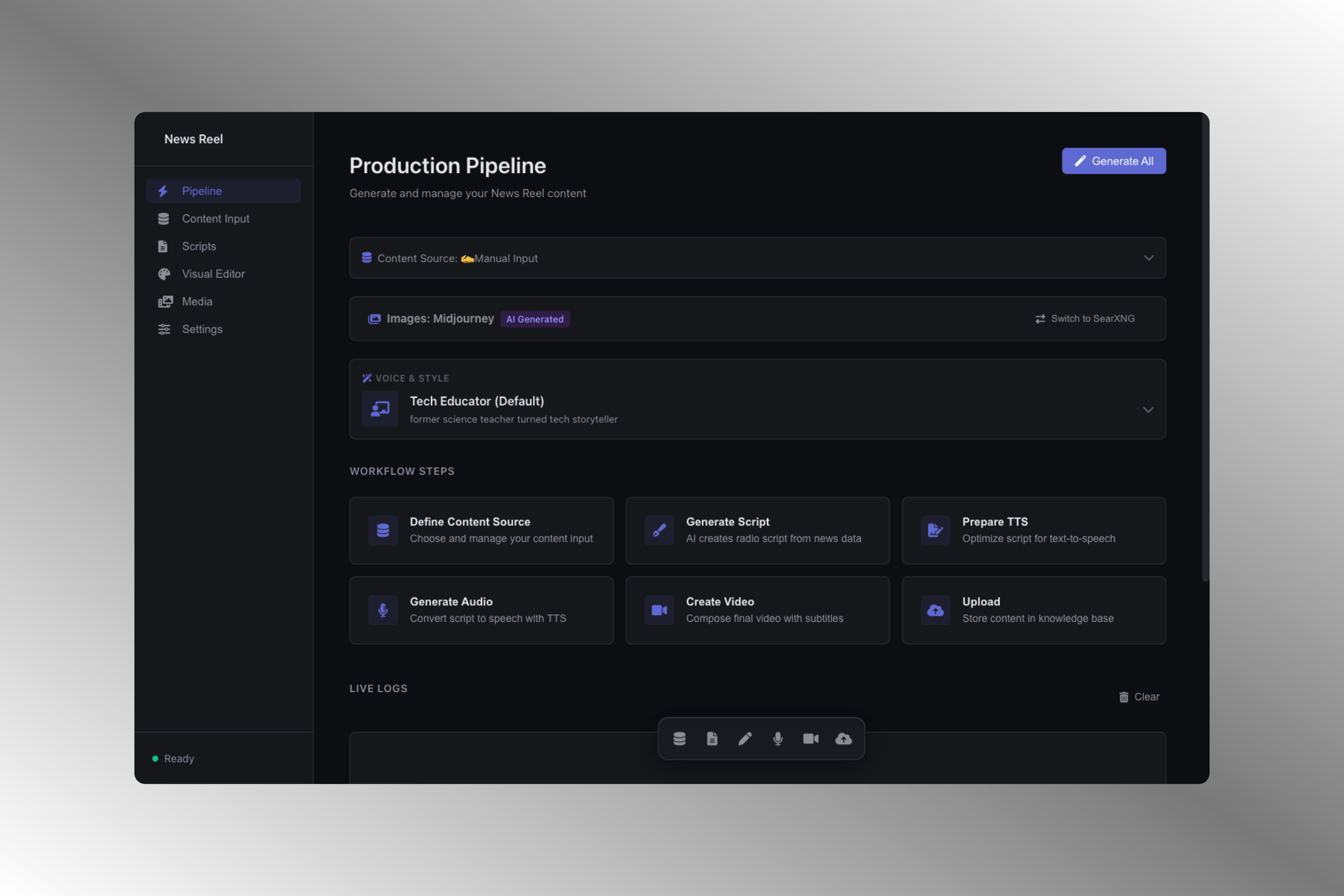
I wanted to see if I could build a fully autonomous content machine — something that could watch social media, understand what's trending, and produce broadcast-quality news videos without any human input. The goal wasn't just technical. It was about understanding how modern content pipelines work — the intersection of social media, AI, and video production.
Making it all work together
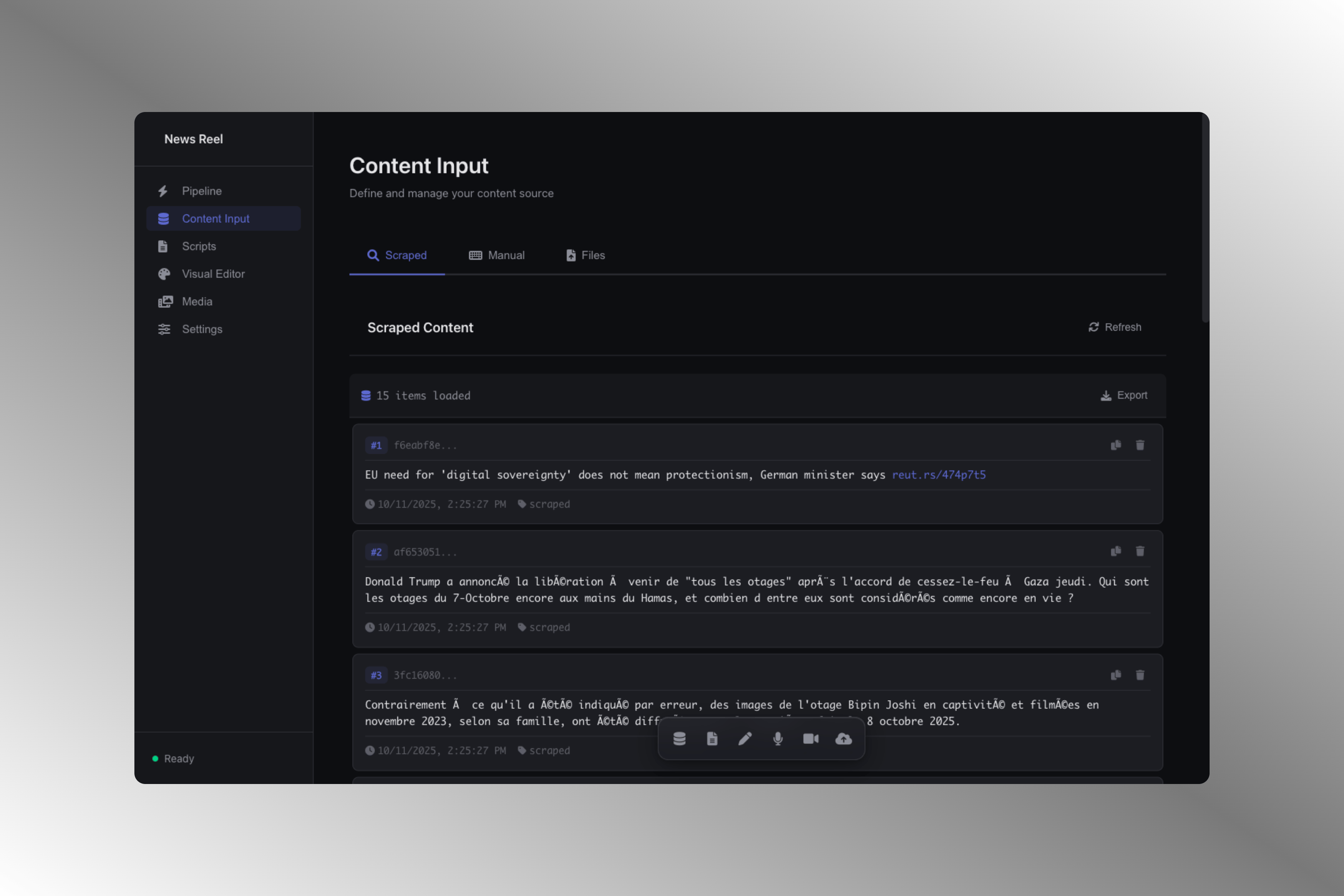
The hard part wasn't any single piece — it was making them all work together reliably. Social platforms change constantly. AI-generated scripts can sound robotic. Text-to-speech needs the right voice. And video assembly has to feel professional, not like a slideshow.
Fragile chains
Each component had its own failure modes, and chaining them meant multiplying the ways things could go wrong.
A modular pipeline
The breakthrough was building isolated modules that could fail independently without breaking the whole system.
Content extraction
A custom watcher monitors social feeds for trending topics, filters noise, and extracts the core story. Built to handle rate limits and adapt when APIs change.
Script generation
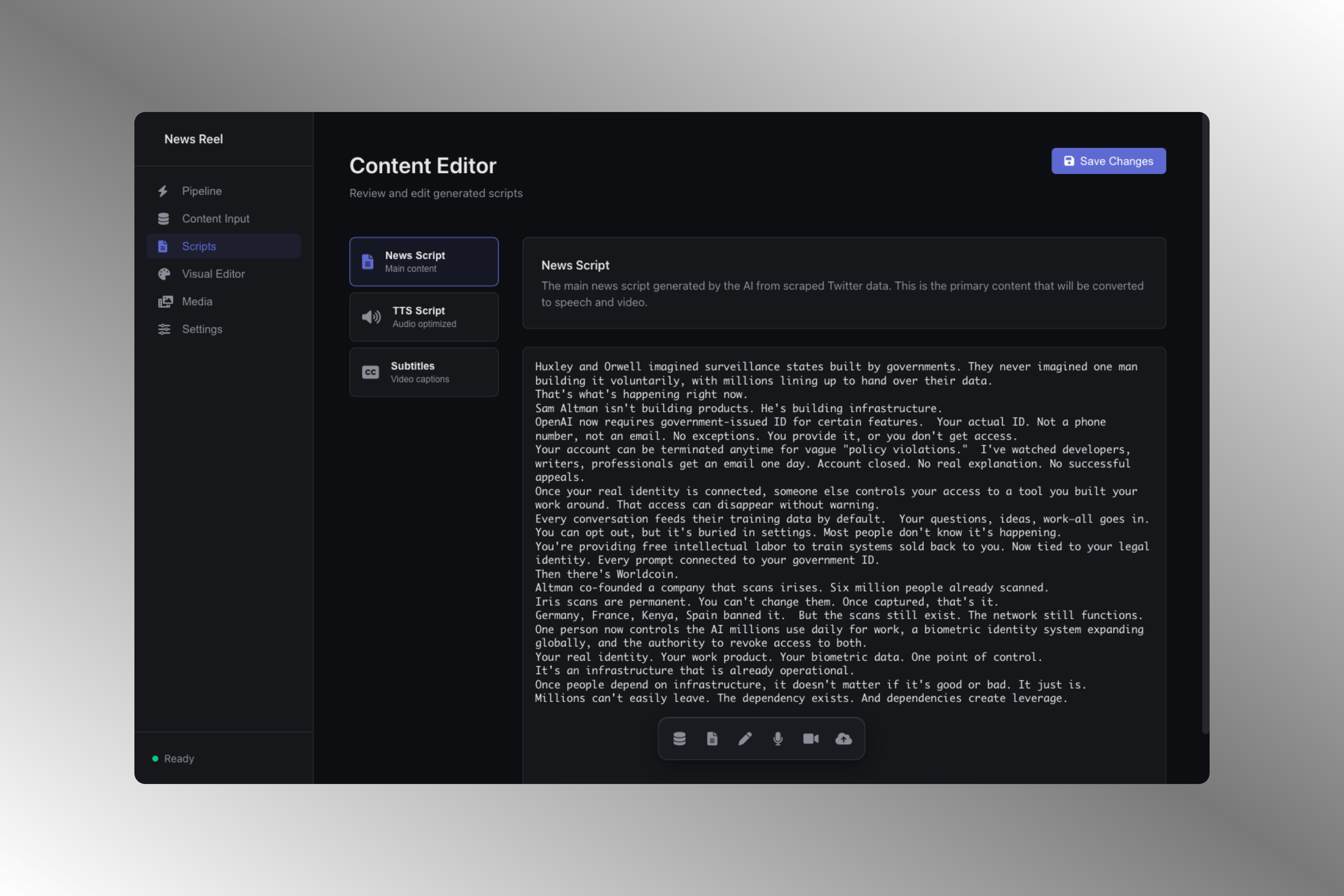
GPT transforms raw posts into broadcast-ready scripts — with proper pacing, hooks, and a consistent editorial voice.
Voice synthesis
ElevenLabs converts scripts into natural-sounding narration. Finding the right voice and pacing took more iteration than expected.
Video assembly
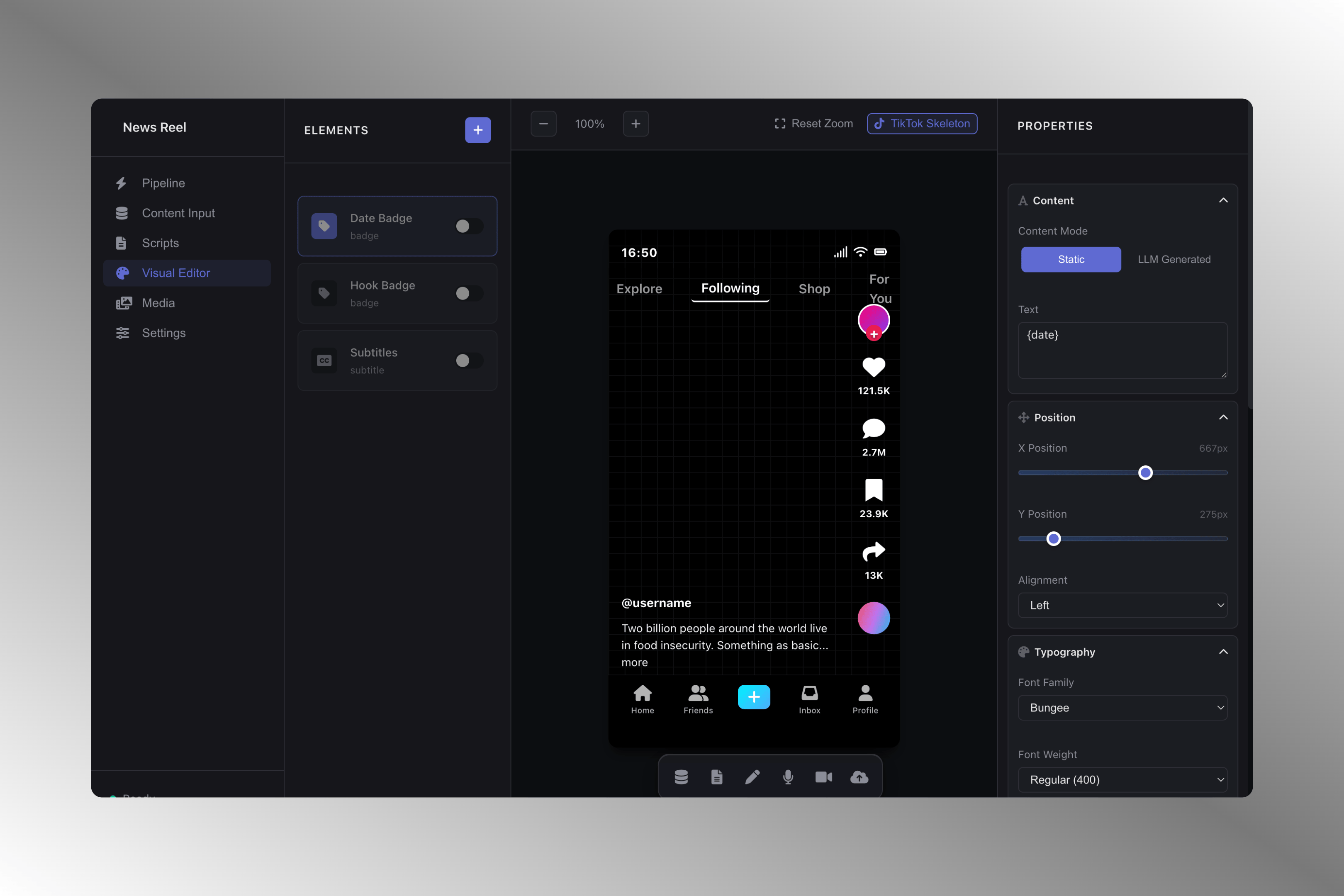
Python orchestrates the final render — syncing visuals, animated captions, transitions, and audio into a polished vertical video ready for TikTok.
Running headless
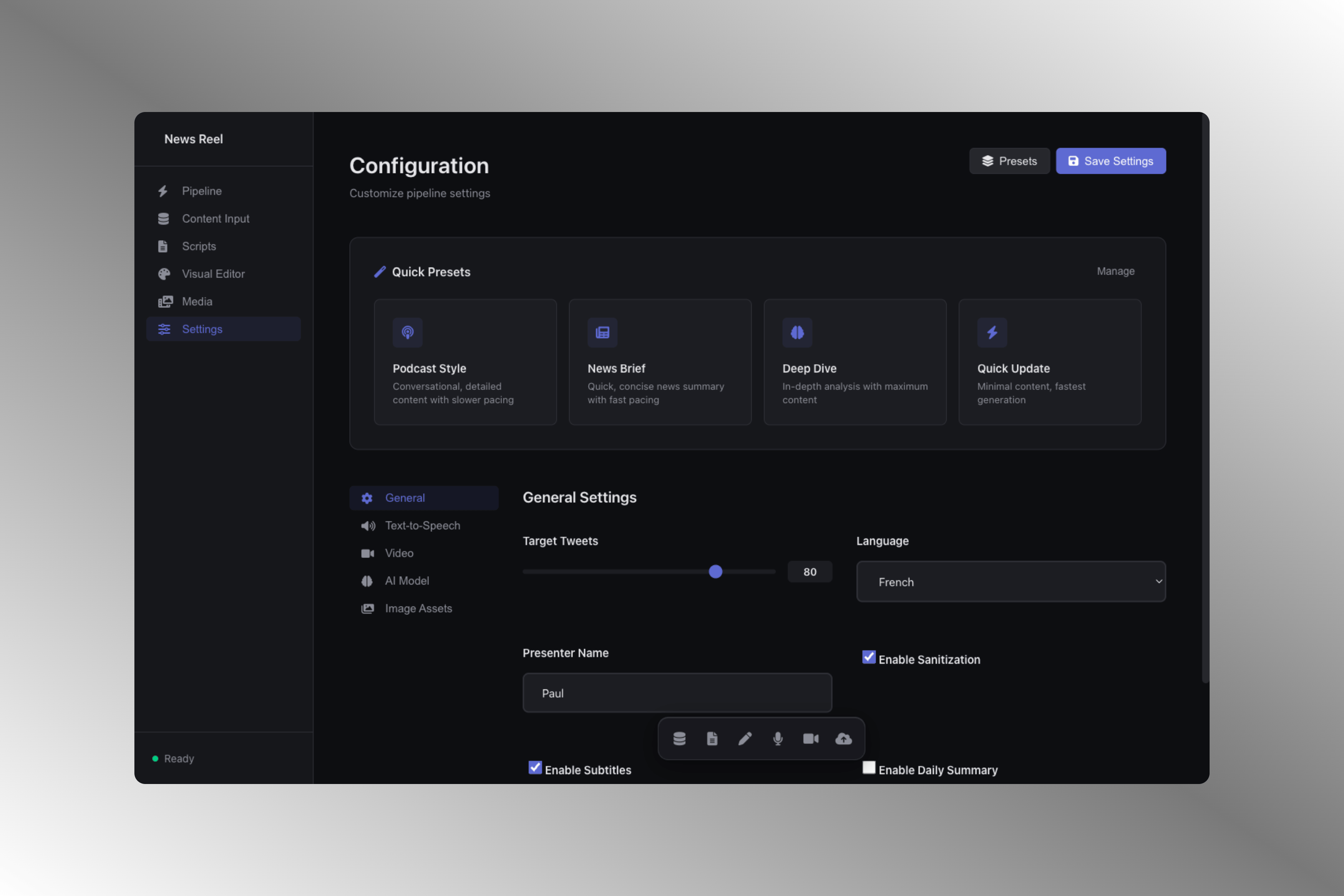
The entire system runs on a server without any interface. Each module is isolated, so when a platform changes something (which happens often), only the watcher needs fixing. The rest of the pipeline stays stable.
Observability
Logging and monitoring became essential — when you're not watching, you need to know exactly where things broke.
What building an automation taught me
Automation is fragile. The real work isn't building the pipeline — it's handling all the ways it can break. Rate limits, API changes, edge cases. The 80% that works is easy; the 20% that fails is where the craft lives.
The spectrum
This project taught me that "fully automated" is a spectrum, not a destination. Perfect automation doesn't exist — but resilient automation does.