Anima

Web3 promised a decentralized future, but it was being suffocated by its own anonymity. "One person, one vote" is impossible when one person can run a thousand bots. Anima set out to restore trust to the decentralized web by creating a layer of "Personhood" — proving you are human without revealing who you are.
The Privacy Paradox
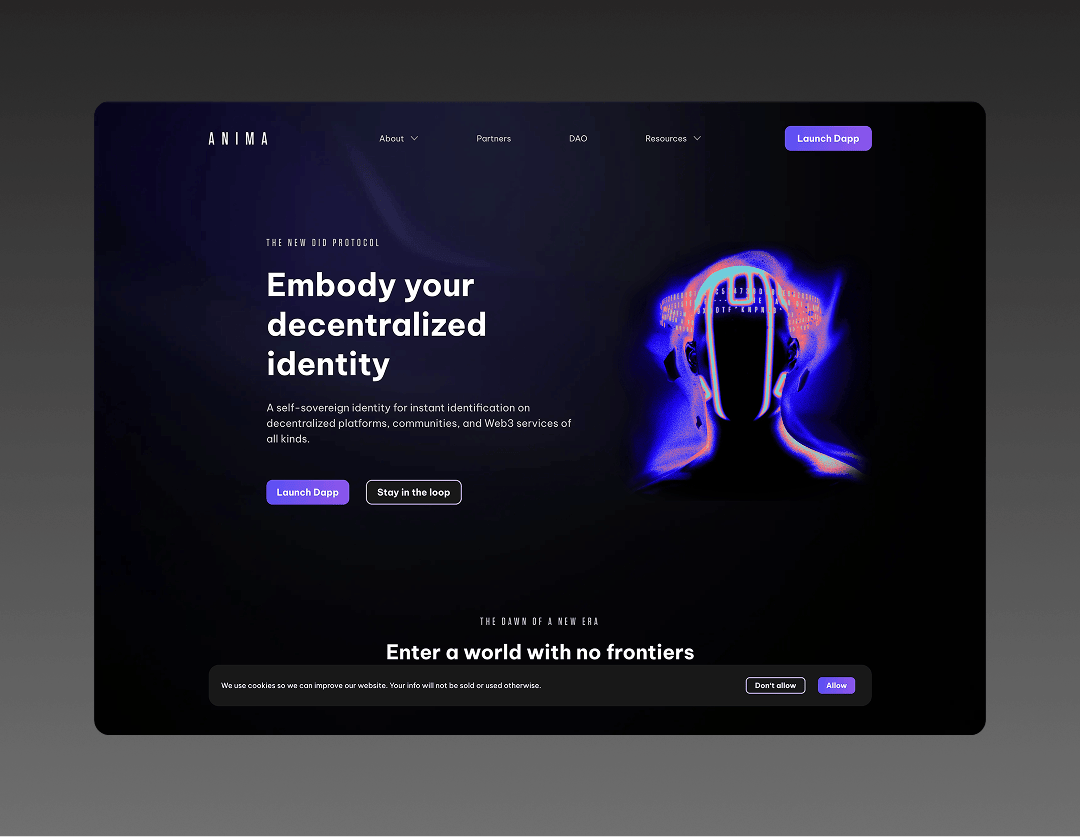
The Fundamental Tension
Web3 was built on anonymity. But anonymity enables abuse. Communities were being drained by farming operations running thousands of fake wallets. Airdrops meant for real users went to bot armies.
The Trust Deficit
Users refused — rightfully — to upload passports to random DAOs. The solutions that existed forced a choice: privacy or participation. That's not a choice. That's a trap.
The Design Question
How do you verify a unique human in an ecosystem designed to protect anonymity? The mechanism had to be rigorous enough to stop bots, but private enough to respect the ethos of Web3.
Decoupling Verification from Identification
The Core Insight
You don't need to know who someone is to know they are human. Identity and personhood are separate concepts. Platforms conflated them because it was easier — not because it was necessary.
The Protocol Shift
I designed the flow around "verify once, prove everywhere." Users establish their humanity in a secure vault. The vault issues a cryptographic proof. Partner platforms check the proof — never the underlying data.
Ownership, Not Custody
I centered the experience on user ownership, not platform custody. No central database to hack. No company holding your documents. Self-sovereign identity as infrastructure.
Making Cryptography Invisible
The UX Problem
Crypto interfaces are notoriously hostile. Seed phrases, gas fees, transaction signing — every step is a potential drop-off. Zero-knowledge proofs are powerful, but explaining them kills adoption.
The Abstraction Layer
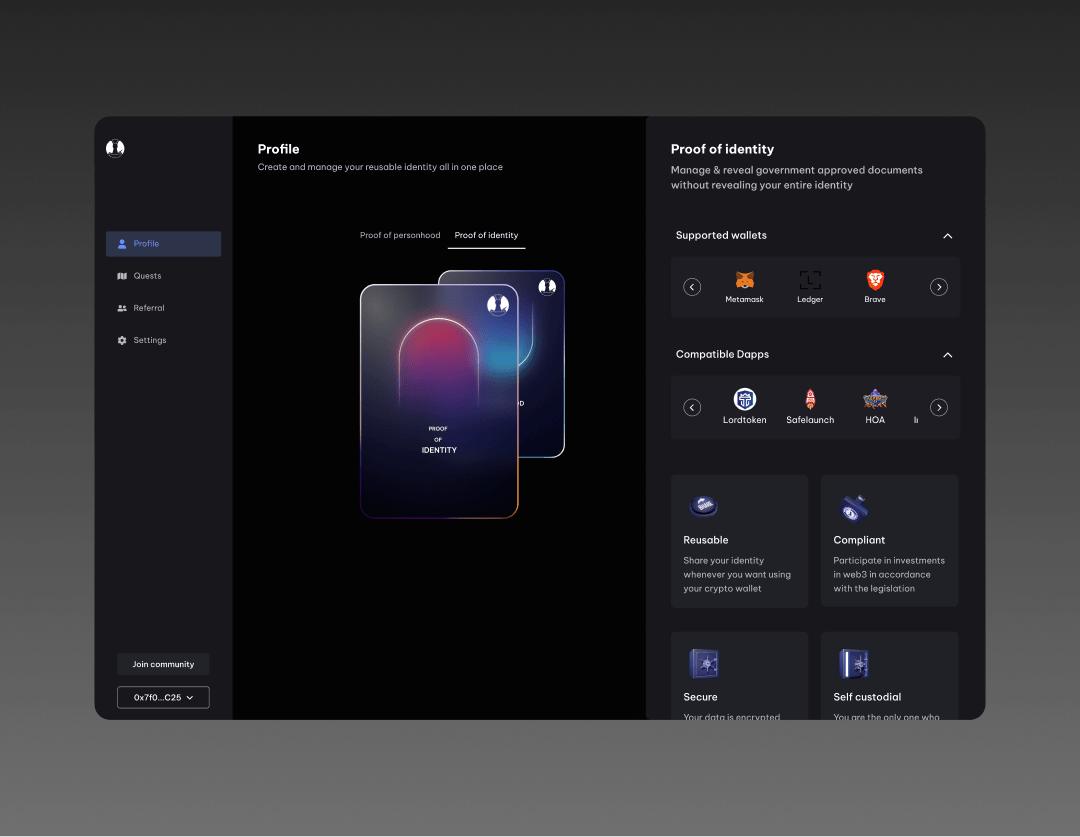
I abstracted the complexity into familiar patterns. Users see a simple face scan I designed to feel native. They receive a "Proof of Identity" card. Behind it: advanced cryptography they never need to understand.
Trust as a Portable Asset
I shifted the mental model from "filling forms" to "owning credentials." Your proof travels with your wallet. One verification unlocks an entire ecosystem of platforms.
From Protocol to Standard
Solving the Sybil Problem
The experience I designed achieved a 99.7% bot prevention rate. Partner DAOs saw near-total elimination of farming attacks during airdrops. Real users got what was meant for them.
Network Effects
100K+ verified identities. 15+ partner integrations. 65K+ reputation tokens claimed. The protocol became the default layer for "Proof of Humanity" in its ecosystem.